
The South Africa issues

The Market Problem

South Africa has a thriving local economy with high demand for commerce, services and skilled work, but the systems that should support it are misaligned. Customers cannot find trusted services or reliable delivery, merchants cannot digitise, technicians and drivers cannot find predictable work, and sponsors cannot evidence outcomes from skills programmes. FASTY exists to close these gaps.
  • Many township and rural customers travel 20 to 60 minutes to reach formal retail, pay a 15 to 30% markup, and lose time and money in the process.

  • Existing apps do not deliver to many township areas, do not list local corner shops, and do not solve for landmark-based addressing.

  • Customers want convenience and reliability comparable to suburbs, but with township- native trust and pricing.

customer pain points - services Large

Customer pain points (services)

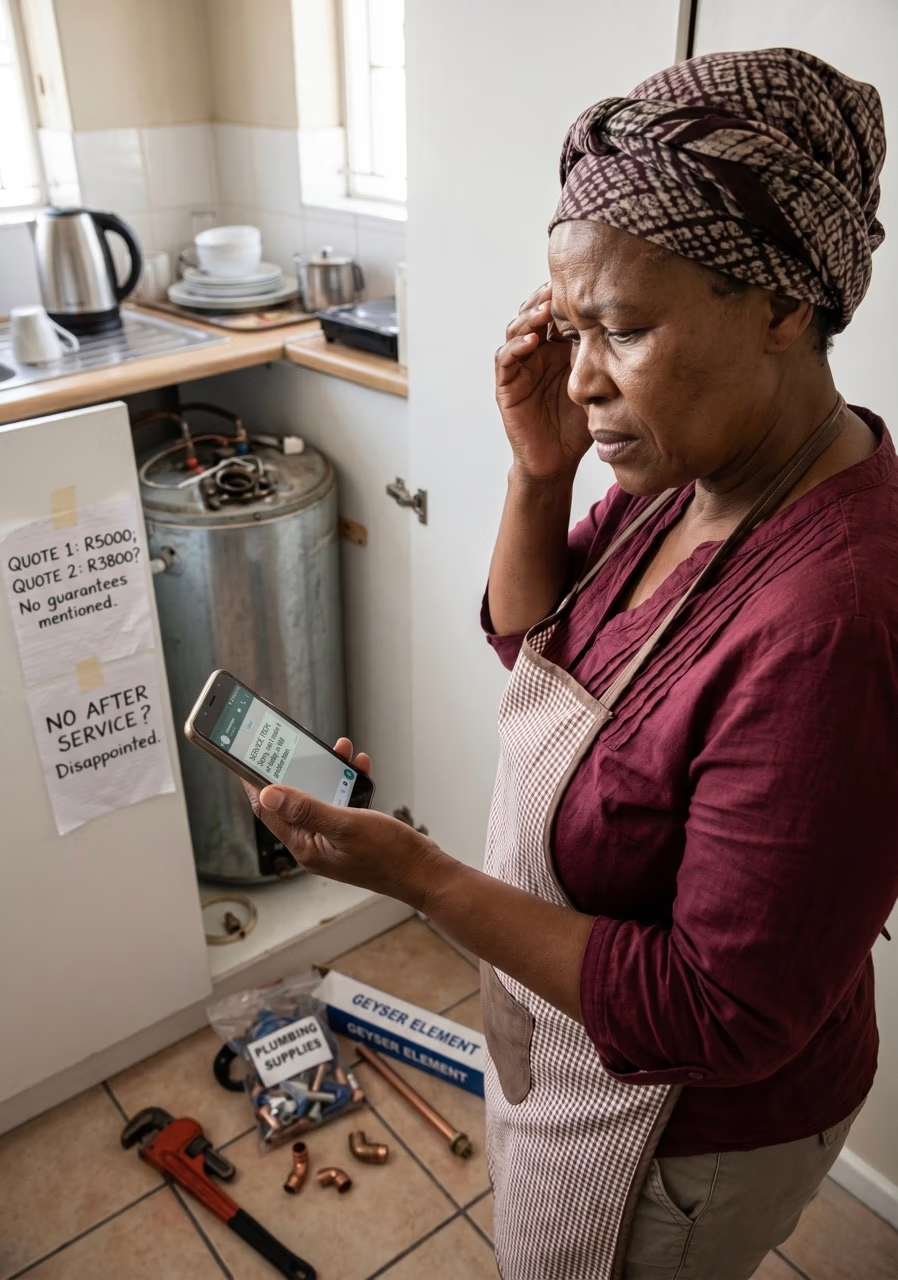
  • Customers struggle to find vetted, competent technicians for energy, water, plumbing, electrical and construction work.

  • Service appointments are missed, pricing is unclear and quality is inconsistent.

  • After-service support, warranties and disputes are handled informally with little accountability.

  • Procurement of parts, delivery and installation are fragmented, leaving customers to coordinate the whole chain themselves.

merchants service points Large

Merchant pain points

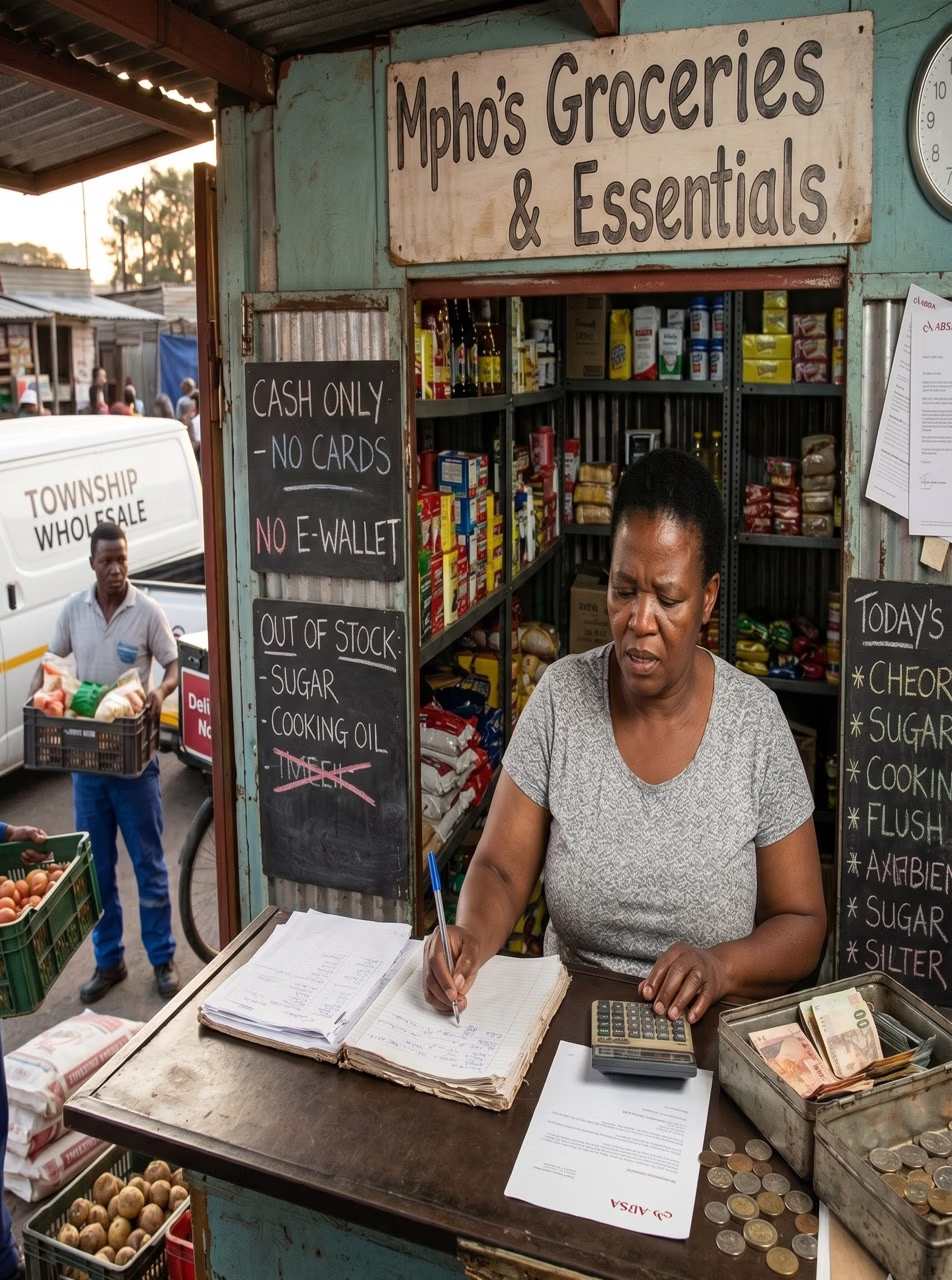
  • Most small and informal merchants have no digital sales channel, online storefront, or structured way to receive orders.

  • They buy from five to eight suppliers, run on cash, and have no integrated way to manage inventory, settlement or marketing.

  • Without a digital footprint, they cannot build a credit history, qualify for working capital, or reach customers outside their walk-in radius.

  • Approximately 70% of small enterprises fail within three years, and the underlying reason is often infrastructure rather than ambition.

driver and technician pain points Large

Driver and technician pain points

  • Skilled drivers, riders and technicians in township and rural areas have irregular work, weak admin support and limited progression.

  • Existing gig platforms skip rural routes and exclude many local providers.

  • Newly trained workers struggle to build a credible track record because training often does not lead to paid jobs.

Sponsor and programme pain points

Sponsor and programme pain points

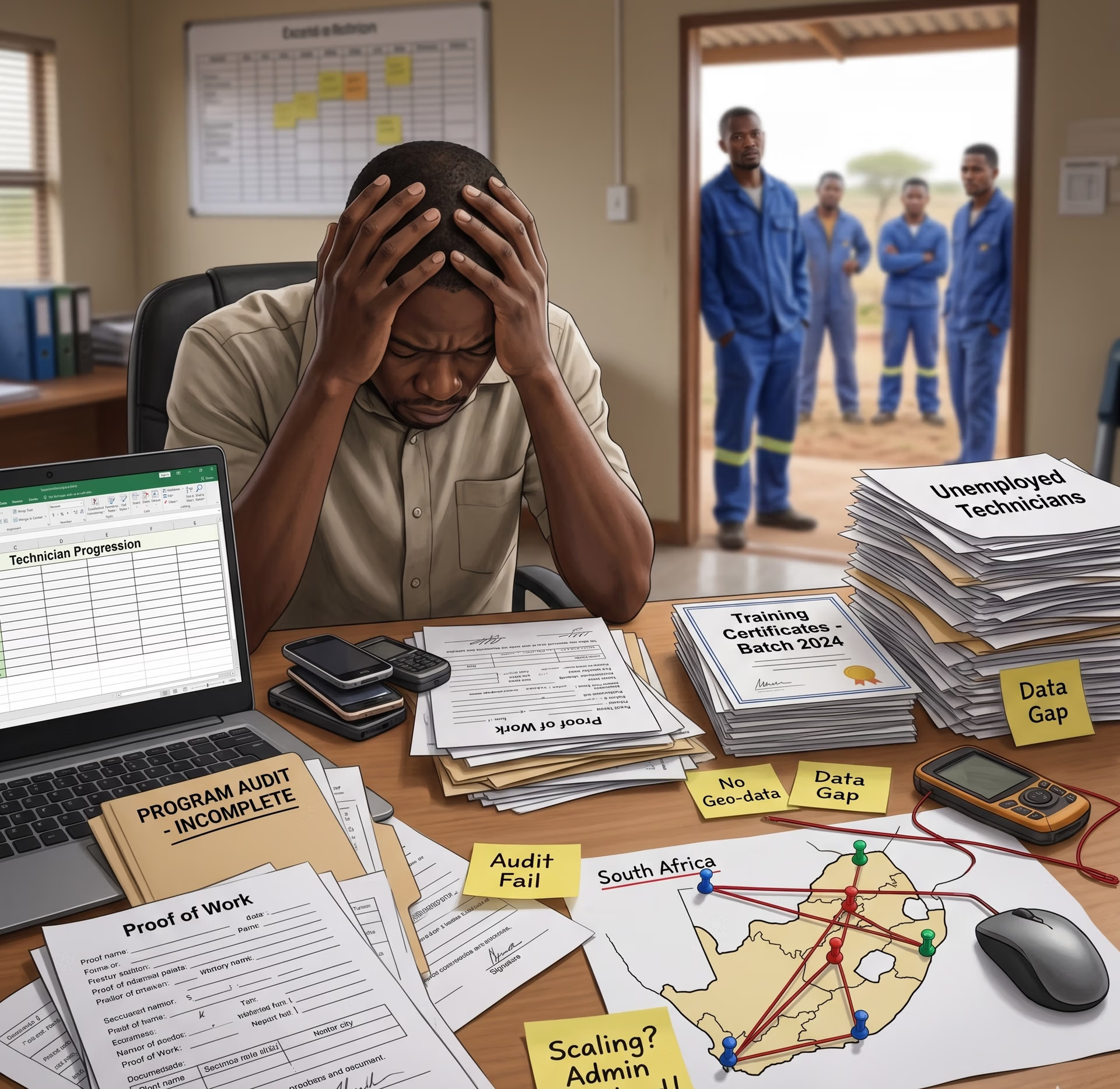
  • Training programmes often lack a structured workplace absorption pathway.

  • Sponsors have weak evidence: limited proof-of-work, geo-tagging, QA trails and audit readiness.

  • Operational complexity makes it hard to scale skilled technicians across regions with consistent quality.